Tuesday, June 15, 2021

Sweet society of love

FORMATION IS NOT PRIVATE Spiritual formation, good or bad, is always profoundly social. You cannot keep it to yourself. Anyone who says, “It’s just between me and God” has misunderstood God as well as “me.” Relationships must be transformed if we are to be transformed. 

Jesus gave a sure mark of the outcome of spiritual formation: We become people who love one another (see John 13:35). This love is not unspecified: “Just as I have loved you, you also should love one another” (verse 34, NRSV, emphasis added). The “love” in question here is identified as what we do in Christ, as he has done for us. This love makes us ready to “lay down our lives for the brethren” (1 John 3:16). 

Failure to love others as Jesus loves us chokes off the flow of the eternal kind of life that our whole human system cries out for (see 1 John 3:14). To welcome others, to make a place for them and provide for them, is one of the most life-giving and life-receiving things a human being can do. These are the basic, universal acts of love. 

Our lives were meant to be full of such acts, drawing on the abundance of God. Such love is possible because of what God is: love. The profoundly good news is not just that God loves us. A pretty mean person can love someone for special reasons (see Matthew 5:46-47). 

But God is love and sustains love for us from his basic reality as love, which dictates his Trinitarian nature. God is in himself a sweet society of love where three persons complete a social matrix. Not only does each one love and receive love, but each has a shared love for another, the third person. The nature of personality is inherently communal, and only the Trinity does justice to what personality is. 

This sort of love is meant to happen routinely among God’s people. In the church as the body of Christ, members nourish one another with the transcendent power that raised up Christ from the dead and now flows through each member to the others.


Monday, June 14, 2021

What's your next step to restful bodily serenity?

A pastor friend of mine explained that he had to take a two-week vacation because it took him an entire week to wind down. Then he could enjoy the second week. How long does it take for your body to wind all the way down like a windup clock that stops only after the daily winding of it ceases? 

When a body is practiced in Sabbath keeping, it can enter into unhurried peace at the drop of a hat—drifting off to sleep in a waiting room, soaking in the sun’s rays on a bench at a soccer field, enjoying stillness even when waiting at a traffic signal. 

But in the beginning of developing such a habit, the body rebels. So we cultivate customary ways to “Sabbath” ourselves down—discovering the settings, the props, and the important preliminary steps that help (for example, not overscheduling ourselves). Don’t be concerned that your steps are small; just be determined to take them. 

TODAY’S EXPERIMENT - Consider what your next step is in advancing a Sabbath practice for your body. What kind of solitude and silence are you ready to attempt: a morning without your cell phone, an afternoon in the park, a fast from all media for a week, a one-day retreat, an extended retreat? 

At first, each of these may feel as if you’re giving up something precious, but it won’t take long to see that you have gained much more than you have given up. You will have given your body space to unlearn its tricks of hurry, competition, achievement, and manipulation. It will have tasted that sense of abiding with God.


Sunday, June 13, 2021

Body as a living sacrifice - cared for with Sabbath rest


SABBATH MOMENTS - The body must be properly cherished and cared for, not as our master, but as a servant of God. Our body is to be regarded as holy because it is owned and inhabited by God. So we give it proper nourishment, exercise, and rest. 

Overwork misuses the body, but it has become the new “drug of choice.” Often this is associated with excessive competition and trying to beat others in some area of life. Sometimes this is just a matter of wearing our body out in order to succeed. God never gives us too much to do. He long ago gave us these words: “It is vain for you to rise up early, to sit up late, to eat the bread of sorrows: for so he giveth his beloved sleep” (Psalm 127:2, KJV). 

The practical center of proper care for the body is Sabbath. Sabbath is inseparable from worship, and, indeed, genuine worship is Sabbath. When we come to the place where we can joyously “do no work” (Leviticus 23:3, KJV), it will be because God has become so exalted in our mind and body that we can trust him with our lives and our world and can take our own hands off them. 

For most of us, we can achieve Sabbath first in the practice of solitude and silence. We must carefully seek these disciplines by cultivating and dwelling in them. When they become established in our soul and our body, we can practice them in company with others. 

But the body must be weaned away from its tendencies to take control, to run the world, to achieve and produce, to attain gratification. Rest is one primary mark of the condition of Sabbath in the body, as unrest is a primary mark of its absence. So if we really intend to submit our body as a living sacrifice to God, our first step might well be to start getting enough sleep. Sleep is a good first use of solitude and silence. It is also a good indicator of how thoroughly we trust in God.


Saturday, June 12, 2021

Who's the most beautiful you know?

A group of people were recently asked to think of the most beautiful woman they knew. Without consulting each other, they didn’t pick a glamorous celebrity. All of them picked women they knew who were much older and very wise. All the women chosen had gray hair! These people laughed to think that they associated beauty with gray hair, because aging and gray hair are so unpleasant to our culture but so honored in God’s view (see Proverbs 16:31; 20:29). 

TODAY’S EXPERIMENT - Choose one of these three topics to journal about or at least ponder while you’re driving: Consider how much time you spend on sprucing up your body—haircuts, grooming, buying body care products, shopping for clothes. What effect does spending this much time have on you? What messages are you sending to yourself (and your children)? 

How would you finish these sentences? I must look____________. I must dress____________.

 
--If you had just one change of clothes (which is what more than half of the people in the world have), how hard would that be for you?
--Think about how you look in the morning before you’ve arranged your hair. How hard would it be for you to live without a comb or other hair accessory?
--Consider why aging seems so negative in our culture and the supreme compliment it is to be told you look ten or twenty years younger than you are. Talk to God about how important (or unimportant) outward looks are to you.
--Ask God to show you how important it is to you that wisdom (sometimes) comes with age.
--What disciplines of simplicity or frugality in dress and appearance might be helpful to you?


Friday, June 11, 2021

"Power dressing," sarcasm, "knowing" looks & remarks?

MISUSES OF THE BODY - Here are some other things we can do to place our body and its parts fully at the disposal of the redeeming power of God living in us. No longer idolize your body. Human ruin comes from placing ourselves at the center of our universe, in place of God. 

This leads to worship of the body and to a life of sensuality. Then our body becomes our primary source of gratification and the chief instrument for getting what we want. For most people, their body governs their life. Even professing Christians often devote to their spiritual growth only a tiny fraction of the time they devote to their body.

So no longer make the body an object of ultimate concern. You don’t need to worry about what will happen to it—sickness, repulsiveness, aging, death—for you have placed God in charge of all that, and any issues that arise in this area you freely take up with him in prayer.

Do not misuse your body, especially as a source of sensual gratification or of domination or manipulation of others. Bodily pleasure is not in itself a bad thing, but when it is exalted to a necessity and we become dependent upon it, then we are slaves of our body and its feelings. Only misery lies ahead. 

When we quit using our body to dominate or control others, we do not present our body in ways that elicit sexual thoughts, feelings, and actions from others. We do not try to be sexy. Giving up these things, of course, could be a fatal blow to the fashion industry and to other large segments of the economy, but we have to leave them to look after themselves. Misusing the body also includes intimidation by means of our body. The most common forms of it are social, for example “power dressing,” sarcasm, and “knowing” looks and remarks. Having given up our body to God, we do not then use it in these ways.


Thursday, June 10, 2021

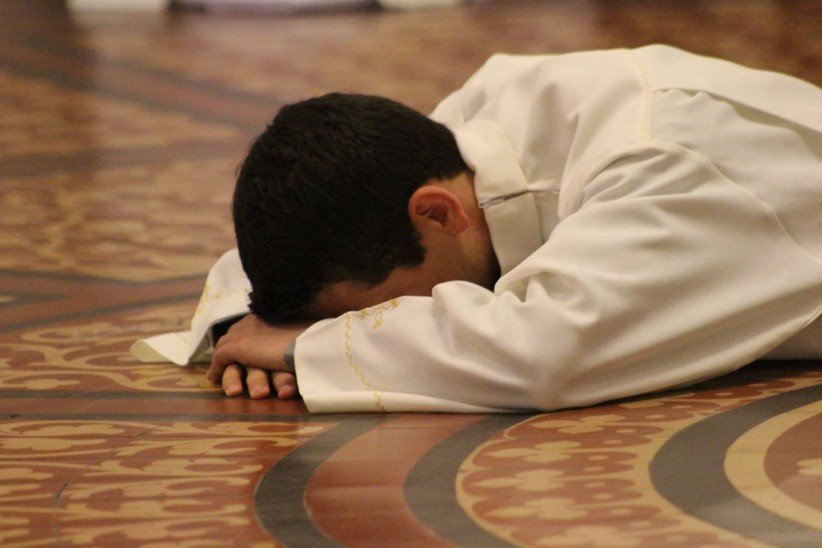
The strange & glorious prostrate position!


 Perhaps the previous suggestion to lie flat in body-dedication sounds strange to you. You might wonder, Can’t I just think about doing it instead of going through this exercise? If your desire is to retrain your body, you need to employ your body in the exercise. You may want to go back and rehearse your strongest and most frequent feelings in the mirror to see how your body responds to those feelings within you before doing this. 

TODAY’S EXPERIMENT - As you lay your body down on the floor as on an altar before God, quiet yourself. Perhaps start with your eyes. Ask God to take charge of your eyes and to fill them with his life and use them for his purposes. Perhaps you want to ask God to keep your eyes from expressions of disgust or terror. Then, ask God to show you what it would look like to offer love with your eyes: to impart compassion with your eyes, to reveal purpose with your eyes. 

Do the same with other parts of your body such as your eyebrows and mouth, your shoulders, and your hands. What tilt of your head or position of your arms embodies love, compassion, or purpose? In the future, as you read the Gospels, notice Jesus’ bodily positions. What did he do with his hands? When and with whom did he squat? At what persons did he gaze? Use these questions to admire how Jesus offered love and purpose in his body.


Wednesday, June 9, 2021

Put your body into it: solitude, meditate, lie flat & dance?! Yes! Let's do this!!!

RELEASING THE BODY TO GOD - Certain steps can be taken so that the body can serve as a primary ally in Christlikeness. These steps help us “present our bodies as a living and holy sacrifice, very pleasing to God” (Romans 12:1, PAR). 

This total yielding of every part of our body to God, until the very tissues and muscles that make it up are inclined toward God and godliness, breaks all conformity with worldly life in this age. It transforms us into conformity with the age to come by completing the renewal of our mind—our powers of thought and imagination and judgment, which are deeply rooted in our body. 

We must actually release our body to God. This needs to be a definite action, renewed as appropriate, perhaps on a yearly basis. But you will not drift into this position before God, and you will not stay there without decisive action. Take a day in silent and solitary retreat. Quiet your soul and your body and let them get clear of the fog of your daily burdens and preoccupations. 

Meditatively pray some central Scriptures before the Lord, especially those dealing directly with the body (see above; also Romans 8:5-14; 1 Corinthians 6:19-20; Colossians 3:5-10). I recommend that you then lie on the floor, facedown or faceup, and formally surrender your body to God. Then go over the main parts of your body and do the same for each one. Ask God to take charge of your body and each part, to fill it with his life and use it for his purposes. 

Accentuate the positive; don’t just think of not sinning with your body. You will find that increasing freedom will follow naturally from active consecration of your body to God’s power and his purpose. Remember, a sacrifice is something taken up in God. 

Give plenty of time to this ritual of sacrifice. Do not rush. When you are done, give God thanks. Arise and spend some time in praise. (An ecstatic reading—chant and walk or dance—of Psalms 145–150 would be an excellent exercise.) Put your body into it. Later, share what you have done with a spiritual friend or pastor and ask him or her to bless it. Review your ritual of sacrifice in thought and prayer from time to time over the following weeks and plan to renew the same ritual surrender year by year.